People Trust You Before They Follow Your Advice
One of the biggest misconceptions in professional services is that great advice is enough.
It isn't.
Before people embrace your recommendations, make meaningful financial decisions, or allow you to influence one of the most important areas of their lives, they first have to trust the person sitting across the table.
That trust isn't built because you know more than someone else. It's built because people believe you genuinely understand them.
Expertise Opens the Door. Trust Invites You In.
Knowledge matters. Credentials matter. Experience matters. They demonstrate competence and earn you the opportunity to begin a conversation.
But competence alone rarely creates confidence.
Trust grows when people feel heard. When they feel understood. When they believe you're trying to solve their problem—not simply present your solution.
That's why two advisors with similar technical knowledge can leave a prospect with completely different impressions. One leaves the meeting thinking, "That person knows a lot." The other leaves the meeting thinking, "That person understands me."
Only one of those relationships is built on trust.
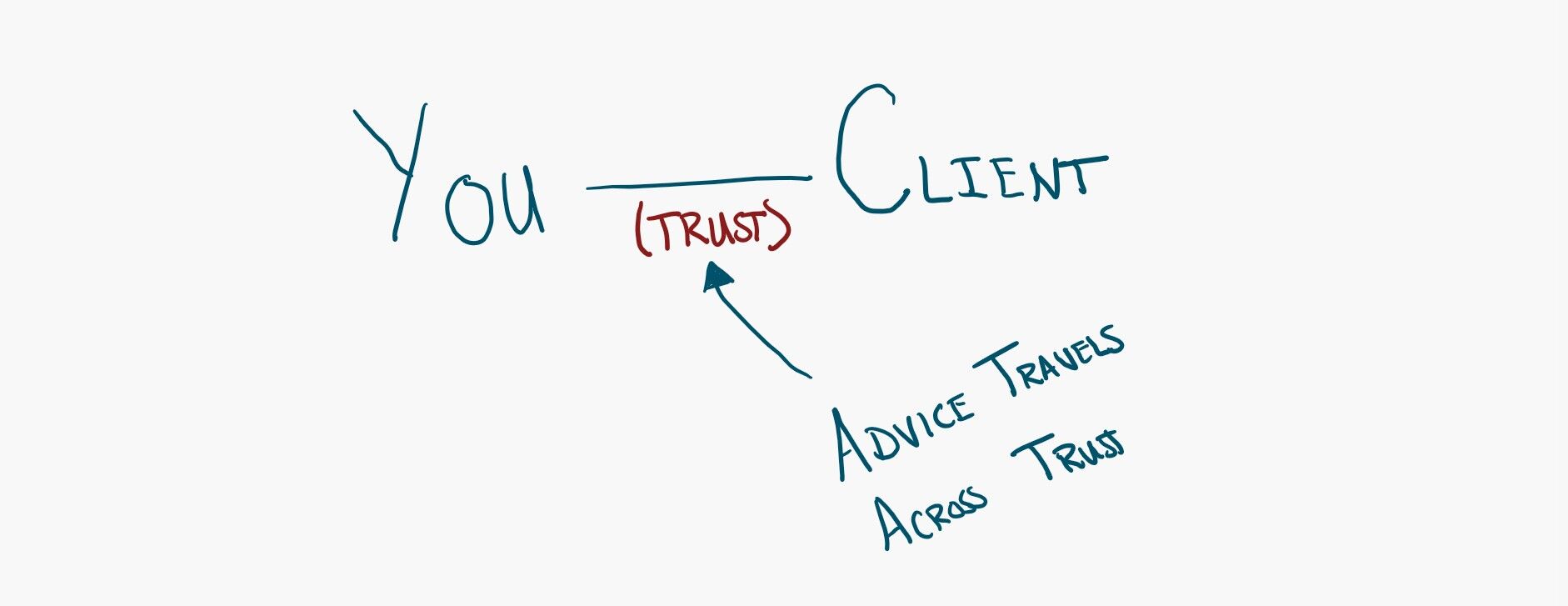
Advice Travels Across Trust
Imagine a bridge.
On one side is the advisor. On the other side is the client.
Between them is trust.
Every recommendation, every difficult conversation, every important financial decision has to cross that bridge. If trust is weak, even technically excellent advice struggles to make it across. If trust is strong, conversations become more open, decisions become more confident, and advice has the opportunity to create lasting change.
That's why we often say:
Advice travels across trust.
Trust Is Built Long Before Advice Is Given
Many people assume financial planning begins with recommendations. We've found it begins with understanding.
Before discussing investments, taxes, estate planning, or insurance, we want to understand the person behind the portfolio. What are they trying to accomplish? What are they trying to protect? What decisions have been weighing on them? What future are they trying to create? It's important to take this a step further - how do they feel about money? What kind of tool does it represent?
Those answers shape every recommendation that follows.
Without understanding, advice is simply information. With understanding, advice becomes meaningful.
The Small Moments Matter Most
Trust is rarely built in one impressive meeting. More often, it's built through dozens of small moments that, on their own, may seem insignificant.
Listening without interrupting.
Following through on a promise.
Being honest when the answer isn't simple.
Taking the time to explain rather than impress.
Remembering what's important to someone long after the meeting has ended.
Individually, those moments don't seem extraordinary. Together, they become the reason someone feels comfortable making important financial decisions with you.
A Different Kind of Financial Relationship
At Tandem, we believe our responsibility extends beyond providing sound financial advice. Our responsibility is to create an environment where people feel understood before they're ever expected to make an important decision.
That's why we spend so much time listening. And why we ask questions before making recommendations. And that's why we believe trust isn't something that happens after the advice. It's what allows the advice to matter in the first place.
Because people rarely follow advice simply because it's technically correct. They follow advice because they trust the person who gave it.
And in our experience, that's where every meaningful financial relationship begins.